Tomb Of Saadat Ali Khan (Fourth Nawad Of Oudh)

In the scenic surroundings of Qaiserbagh, there are three historically significant monuments situated on a single campus: the Mausoleum of Saadat Ali Khan, the Mausoleum of Musheerzadi, and the Sapper’s Tomb.
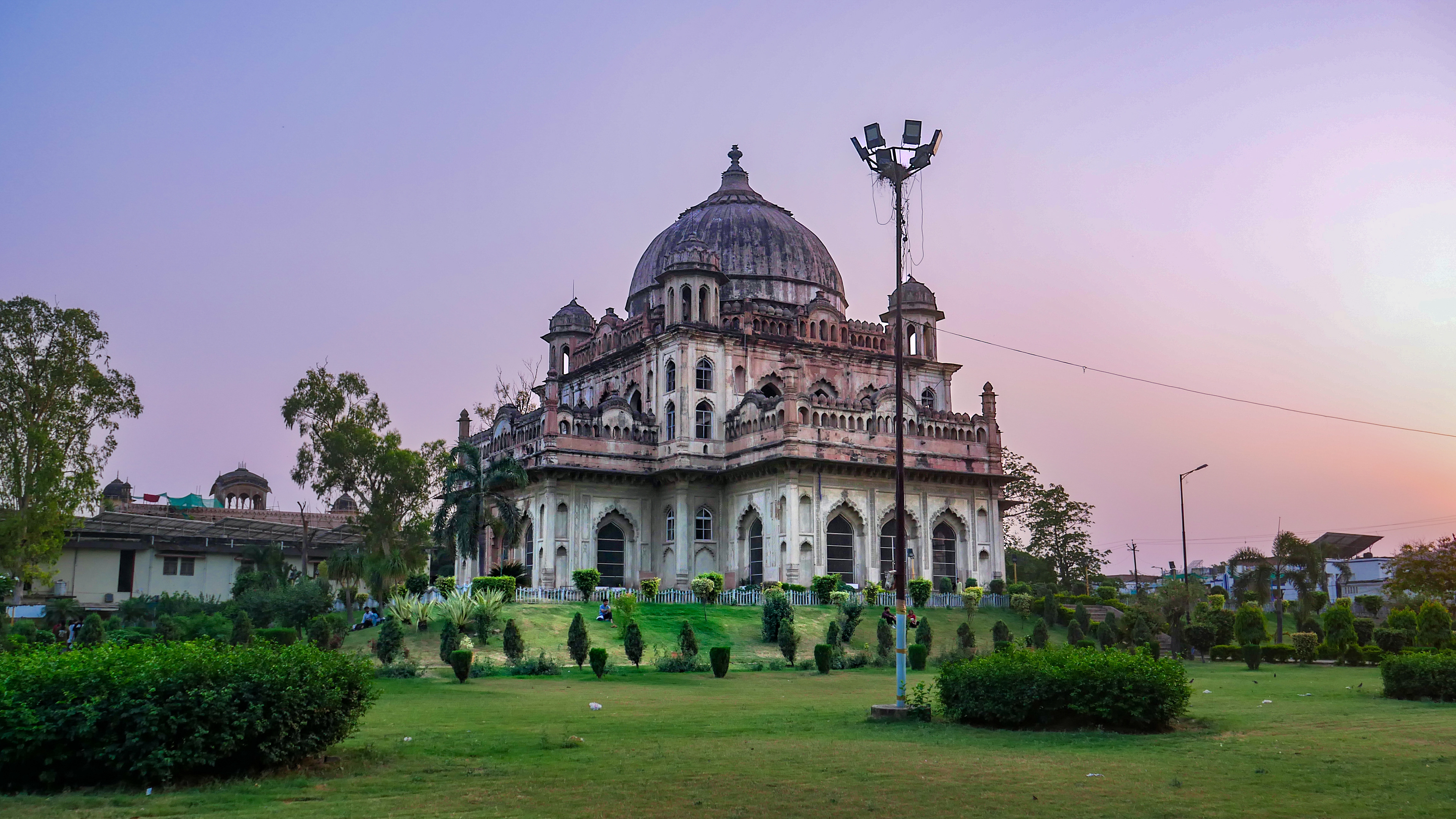
The magnificent tomb of Saadat Ali Khan, the fourth Nawab of Oudh, stands as a symbol of filial devotion and fine architecture. Built by his successor and son, Ghazi-ud-Din Haidar, it is set atop a lush hillock, encircled by well-kept gardens and decorative railings.
Originally, the site housed Ghazi-ud-Din’s palace, where he lived as heir. Upon becoming Nawab, he ordered the palace’s destruction to create his father’s final resting place, demonstrating his filial affection.
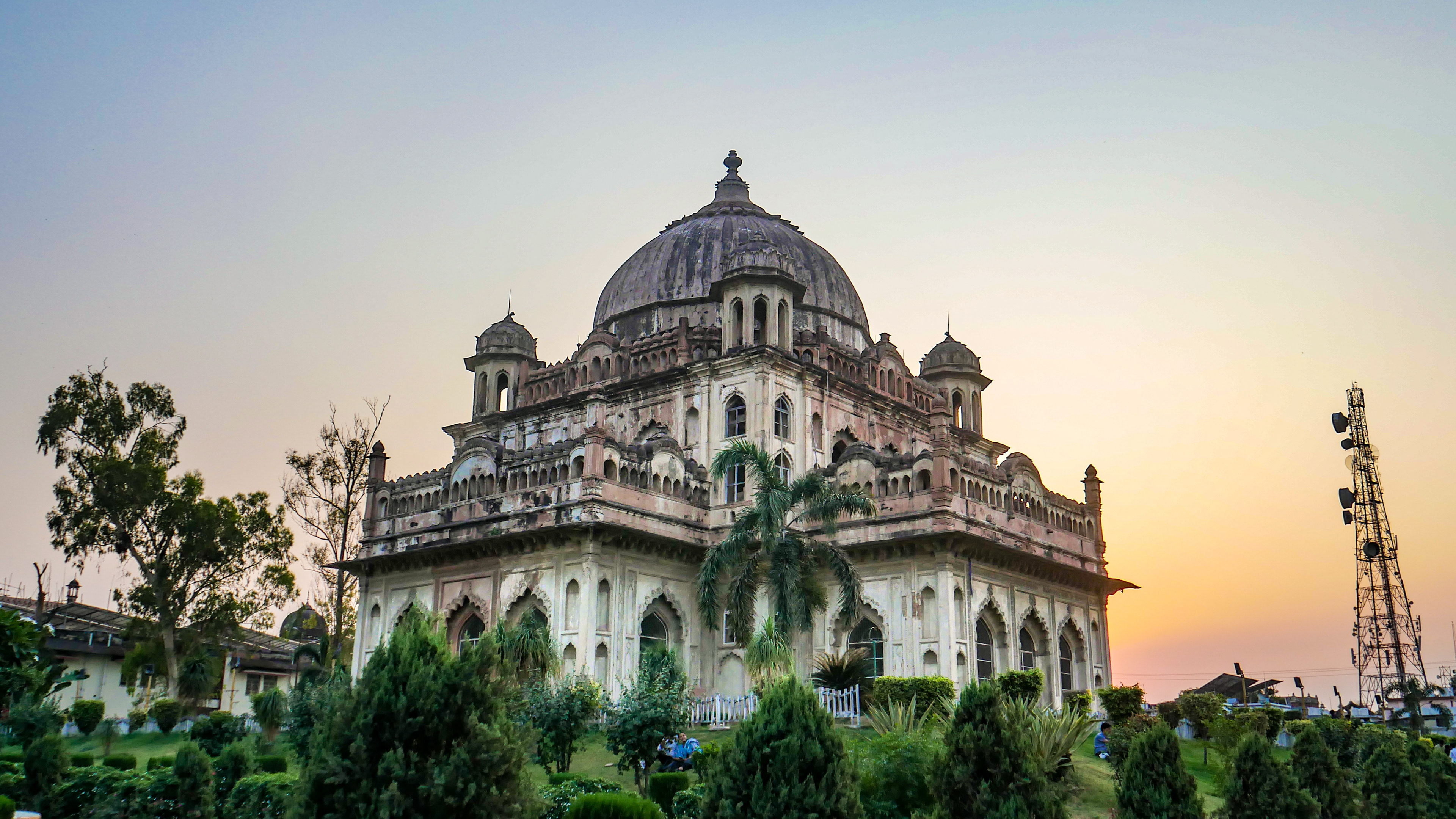
The mausoleum features a grand dome and a floor designed like an elegant black-and-white marble chessboard. A pathway guides visitors to the underground vault where Saadat Ali Khan is buried. Nearby, an corridor contains the unadorned graves of three Begams in recessed spaces in the red brick floor.
Their daughters’ resting places are located in a nearby eastern gallery. A spiral staircase leads into a dark passage with three recesses for Saadat Ali Khan and his two brothers.
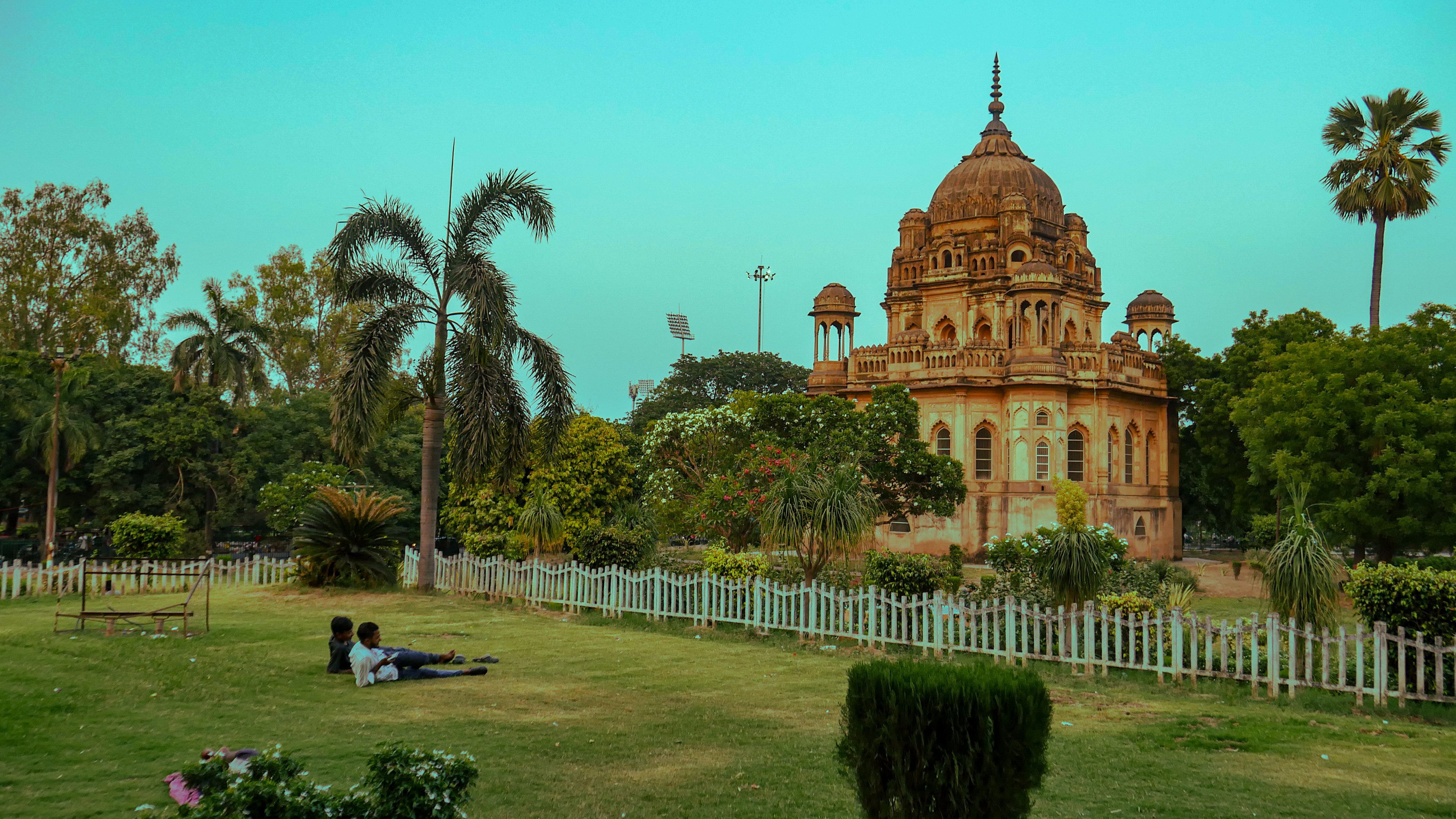
In the eastern corner, a smaller mausoleum holds the sarcophagus of Musheerzadi, Saadat Ali Khan’s wife and Ghazi-ud-Din’s beloved mother.
These grounds witnessed fierce fighting during the mutiny, with cannons fired from atop the tombs to thwart General Havelock’s rescue efforts.
Next to the main mausoleum is the simple Sapper’s Tomb, a stone-flagged grave enclosed by a low railing. It commemorates officers and soldiers of the 23rd Company of the Royal Engineers, who died after an explosion of abandoned gunpowder on March 17, 1858. A delicate white marble plaque marks this tragic event. All three monuments are protected by the Archaeological Survey of India under Notification No. UP 1645-M/1133, dated December 22, 1920.